




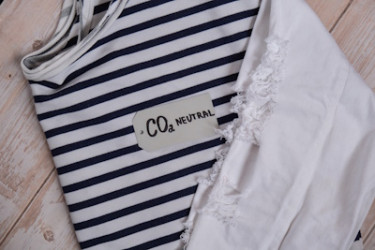
 A new study published at the beginning of February 2026 shows that branded promotional products achieve a strong marketing impact and a significantly lower carbon footprint per recall than most other forms of advertising. This provides brands with a data-driven possibility of evaluating the effectiveness and sustainability simultaneously.
The first study of this kind was initiated as part of an international collaboration between the German Promotional Products Association (GWW) and other partners of the European Associations Cooperation (EAC), commissioned jointly with the US industry networks ASI (Advertising Specialty Institute) and PPAI (Promotional Products Association International), and conducted by the independent British climate platform, 51toCarbonZero Ltd.
The results compare haptic advertising media to digital, radio and print advertising, when both the marketing and environmental impact are measured side-by-side. 51toCarbonZero Ltd. used established carbon-tracking tools as well as published research results to lay down consistent, reliable benchmarks. The necessary data originates from two distributors: a European and an American promotional products consultant and distributor, both of which are big enough to be representative for these markets.
The “Promotional Products Carbon Project” measured the environmental impact of products bearing a logo throughout their entire life cycle – from the production and dispatch, through to their use and disposal. Furthermore, the data was prepared in such a way that it could be compared with that of digital, TV, radio, outdoor and print advertising in Europe and the USA.
The most important findings are that, measured in the emissions per stored impression, which is how people often remember a brand they have seen – promotional items rank second only to, or on par with, outdoor advertising (such as billboards) and surpass digital advertising, television, radio and print media. Furthermore, promotional items generated up to eight times fewer CO2 emissions per recall than digital advertising such as social media and online display ads. Thirdly, in the US and European markets, promotional items were among the most carbon-efficient, campaign-based advertising options studied.
According to the participating associations, this study is decisive for the industry for many reasons: Since promotional products are used repeatedly, they ensure continuous brand exposure over the course of time, resulting in lower emissions per recall impression – a significant advantage as digital advertising increasingly relies on energy-intensive technologies such as AI. Unlike digital and broadcast channels, promotional items are manufactured within a controllable supply chain, allowing brands to influence materials, production, logistics and end-of-life management. And the ASI’s long-term Ad Impressions study shows that sustainability also influences effectiveness: 74% of consumers say they would rate an advertiser more positively, if they gifted them an environmentally-friendly promotional product.
“This study provides the promotional products industry with something it has needed for a long time – credible data that puts sustainability claims into real-life context,“ said Timothy M. Andrews, President and CEO of the ASI. “Using actual sales data from major US and European distributors and proven carbon-tracking tools, the study shows how promotional products compare to other brand advertising channels, based on measurable impact, rather than assumptions. Brands, marketers and the entire industry will benefit from this level of transparency.”
“This study clearly demonstrates that promotional products have a powerful marketing impact in both the European and US markets, while causing a significantly smaller carbon footprint compared to other major media channels,“ added Drew Holmgreen, President and CEO of the PPAI. “These results confirm what we have already known for some time – that promotional and merchandise items are an effective, sustainable and highly-estimated component of the marketing mix.”
The conclusions that can be drawn from the international study are also clear for Frank Jansen, CEO of the GWW (German Association of Promotional Products): “The study demonstrates in figures and data what every recipient of advertising has intuitively known for a long time: Promotional items don’t disappear into digital nirvana after seconds. They often remain present in households for years, thus ensuring a lasting brand impact with a comparatively small carbon footprint. Now, the results need to be translated into concrete action and anchored in the minds of decision-makers and marketing managers!”
This is why the GWW doesn’t view the study to be the endpoint, but rather as a foundation for future steps. More distributors and suppliers are encouraged to participate in future studies, expand the primary data sets and develop clear targets for reducing the industry’s carbon footprint. The “Promotional Products Carbon Project” study provides retailers with the data they need to conduct well-founded discussions on sustainability and demonstrate the long-term value of promotional items.

Photo source: Shutterstock