




In the 1990s, it was the Backstreet Boys and the Spice Girls, in the millennium years, One Direction. Today, the most popular bands are Stray Kids, BTS and Blackpink. What is special about them is the fact that they don’t come from the USA or Great Britain. They come from Korea, bringing not only their music, but also new merchandise and a completely different fan culture with them to Europe.
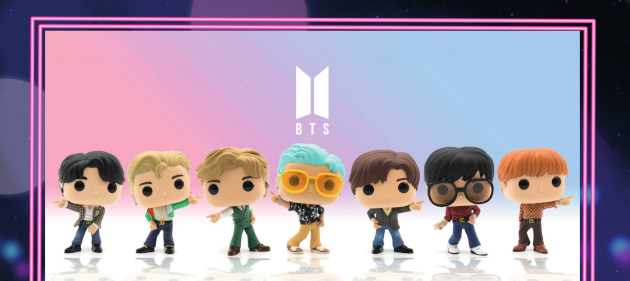
In 2025, the streaming provider, Netflix, recorded a massive success with the film, K-pop Demon Hunters, something no one had anticipated. The title song, Golden, became the summer hit of the year – the first K-pop song to ever do so. It is also thanks to the series’ success, that K- is no longer a fringe phenomenon. Whereby the Korean wave has been sweeping through Europe for some time. K-pop’s success began with the popularity of dramas, films and music; today fashion and skincare are also very popular, especially among teenagers and young adults. K-pop moved away from its sub-cultural role with the success of the K-pop group, BTS, at the very latest, who succeeded in topping the US Billboard album charts for the first time in 2018.
Stars (nearly) within reach
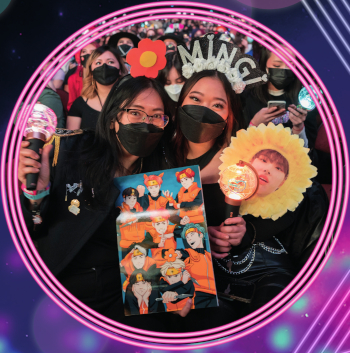 Martina Binder, an employee at Daebak, Germany’s first K-pop shop, explained regarding the phenomenon, “K-pop suggests a perfect, ideal world to its fans. This portrayal alone strikes a chord with many fans. Basically, ‘being there’ plays a huge role in K-pop. Many bands have their own shows on YouTube, where they regularly release new episodes, offer behind-the-scenes glimpses, show choreography training, et cetera. The sheer volume of content is on a completely different scale than what we are used to from Western artists,” she added. The K-pop community is generally very active on social media. “Our store is also intended to be a meeting place for the community. We have installed a seating area, where we offer fans and accompanying parents the opportunity to connect or have a drink,” reported Thomas Funk, founder and owner of Daebak. “We have also set up an unboxing zone, where fans can show off their newly purchased products, unpack albums and film them for social media. In this way, they promote our store and have the opportunity to create high-quality content,” said Funk. The events that Funk and his team organise on a regular basis are also particularly popular at the Frankfurt store. Of course, these also include release parties, where new albums are released that can then be purchased directly in the shop, swap meets for the popular photo cards and birthday parties for the so-called idols, as the stars of the bands are known. “We cooperate, among others, with a Korean company that allows us to sell some CDs on the same day they are released in Korea,” reported Funk, who has been running his store since 2012 and regularly travels to Korea himself. Since the physical albums are usually only available in Germany much later, K-pop fans regularly pilgrim to Frankfurt.
K Idol stores are also popular destinations for K-pop fans. “Stores like ours are important for fans in Europe,” commented Farah El Haj Ali, Manager of the K Idol store in Kiel. “Concerts in Europe are still the exception to the rule and since travelling to Korea is very expensive, our stores offer fans an alternative to meet like-minded people, feel comfortable and, of course, buy merchandise,” El Haj Ali added.
Limited and personal
Düsseldorf is a further popular destination for K-pop fans. The K-pop photo booth located in a shop that specialises in unusual Korean and Japanese cuisine, where fans can have their picture taken digitally with their favourite star, is a particular favourite. For between five and ten Euros, fans can purchase two strips of four photos each taken of themselves together with their idol, who is inserted digitally. The results are strikingly realistic, allowing fans to take home almost real photos with their idols. “In K-pop everything looks very high-quality,” the Kiel-based Manager, El Haj Ali, assured. “This starts with the music videos and social media presence and extends to the merchandise. All the fan items are colourful and appealing and have a certain quality that distinguishes K-pop,” the expert explained.
The merchandise experience in K-pop already begins with purchasing a CD. Whereas the music industry in general still enjoyed relatively stable CD sales in the millennium years, the vast majority of music fans – especially younger ones – have now switched to streaming. The CD is generally considered to be obsolete. This is not the case on the K-pop scene: “In K-pop, you don’t just get a CD, you receive a small merchandise package. Normally, the CDs include some of the popular photo cards of the idols,” explained El Haj Ali, describing the contents of the CD packages. These photo cards are small pictures of the band members and are very popular within the community. Fans either collect the different cards of their favourite star or try to trade them in for the entire band. “In the best-case scenario, the albums even include two or three extras, such as bookmarks or small posters,” El Haj Ali added. Because the photo cards are randomly distributed among the CDs, certain cards or other extras become sought-after collector’s items.
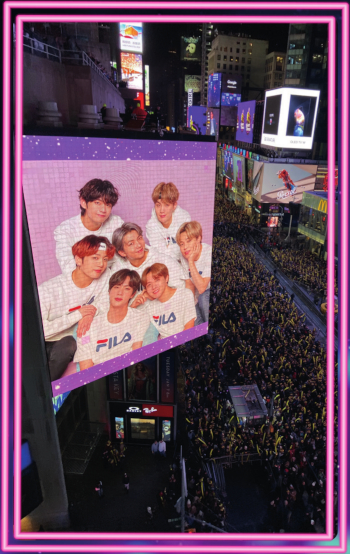 The so-called lightsticks are also very popular. These are special lightsticks in various shapes, each associated with a band and often featuring their logo. The lightsticks are Bluetooth-enabled and can be connected to official apps at concerts, providing synchronised light effects. Similar concepts have also been adopted by several Western bands, such as Coldplay. “The lightsticks aren’t just used at concerts; the fans can also take them home and they are among the most popular merchandise,” the K-pop expert, El Haj Ali, stated. “Many fans buy the sticks even without attending concerts, so they can conjure up a concert-like experience at home. Importing the lightsticks can be a bit tricky at times,” Daebak’s owner, Funk, admitted. “We have had some bad experiences importing merchandise. It is particularly difficult with lightsticks, since electronic items are often not designed for the European market.” K Idol in Kiel is also familiar with these difficulties: “There are various lightsticks from artists and groups that we are not allowed to offer due to the lack of them having a CE marking. This is a shame for many fans, but it also shows that the European market is not a top priority,” reported El Haj Ali. Nevertheless, both shops offer certified and approved lightsticks – if they don’t happen to be sold out again.
Cuddly toys are a further merchandise item that plays a major role in K-pop. Based on manga and anime characters, there is a plush character for almost every idol. These plush toys are not only available as figurines, but also as keychains, pillows, dolls or printed on T-shirts. The characters are often designed by the idols themselves, giving fans a further sense of connection. Fans also recognise each other and immediately know which band and idol their counterpart favours. “The cuddly toys of K-pop groups have become incredibly popular with fans and are among the absolute highlights,” reported Daebak founder, Funk. Especially since there are increasingly more limited editions, which in turn generate even more buzz. “The limited editions lend many products an exclusive status,” reported El Haj Ali. “These include lightsticks and photo cards. This makes it more appealing to buy the products directly on their release date, as they might be sold out later.”
Of course, T-shirts and hoodies are always popular classics, especially at concerts. While most of the merchandise exported to Germany is of comparable quality to Korean products, Binder, a Daebak employee, often observes inconsistencies in textiles. “After a Stray Kids concert in the summer of 2025, we were able to offer a limited number of imported tour shirts in the store. Of course, at the same time, we also saw the merchandise that was being sold at the official stands in the stadium. The quality of the Korean products was significantly higher. This also shows that many labels place greater importance on the Asian market tending to take Europe less seriously,” Binder noted.
Experiencing Korea
According to the three experts, there are also other significant differences between the Korean and German merchandise business. “I first visited Korea in 2017 to meet our suppliers in person. Since then, I have returned every year, drawing inspiration from new trends,” commented Funk. It was there that he gathered ideas for the events he now hosts in his Frankfurt store. The Korean stores are considered to be experiential world, something which the European stores strive to emulate. “In Korea, there are many pop-up stores, designed to coincide with album releases or the theme of the event,” revealed El Haj Ali, who also travels to Korea regularly to stay up-to-date. “Store visits in Korea are memorable because one often receives give-aways or small promotional items to take home,” the employee from Kiel said.
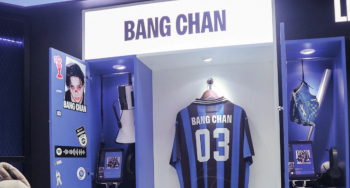 Besides these unique stores, there are also numerous collaborations between idols and major brands in Korea, as El Haj Ali explained. However, these are not available in Europe. While European fans desperately try to get their hands on exclusive merchandise, the brands see little incentive to launch their products in Europe. “The concept of exclusivity is also a significant factor as well,” the K Idol manager explains. “For the bands and brands, it is crucial to constantly release new products to keep the fans engaged. Cooperations with the Korean tourism board also play a role, as they want to encourage fans to travel to Korea,” El Haj Ali added. K-pop thus connects pop culture with an interest in a new country. And while the Korean music industry is keeping Europe on a tight leash as a market and only slowly beginning to explore it, stores like K Idol and Daebak are striving to provide K-pop fans with small havens and, thanks to the aid of appropriate merchandise, allow every fan to participate in the K-pop universe. //SCA